In creating the pages of this website I’ve used everyday language wherever possible. The Newcreator’s Glossary provides definitions of terms that may be unfamiliar or used in an unconventional way. Where I’ve repurposed an existing term or invented a new one, I’ve tagged the entry with the ♥ symbol.
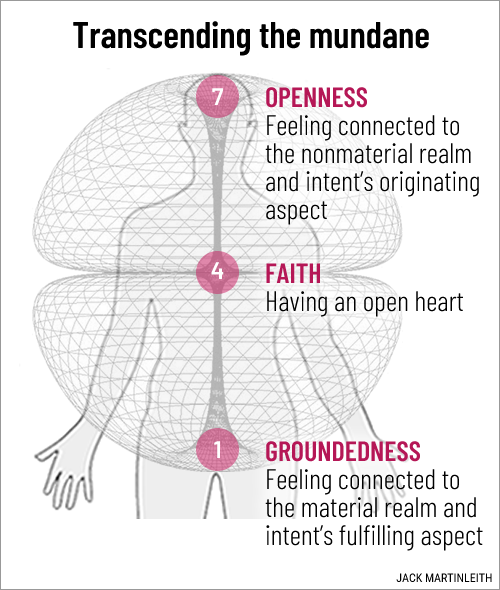
A synthesis of the activating powers of Groundedness (1), Love (4) and Openness (7) that enables the newcreator to transcend the mundane.
Anti-value ♥
The degenerative counterpart of value. Anti-value is more than dissatisfaction. It manifests as an experience of physical pain or emotional upset arising from a poorly designed or malfunctioning value generator, or from the denial of previously received and possibly taken for granted value. Anti-value generation may be deliberate or unintended.
If goodwill is an asset, then badwill is a liability. Badwill comes about when customers or other beneficiaries (past, present and potential) make public their experience of anti-value generated by the enterprise. Badwill can play out in the form of decreased revenue, loss of clients or suppliers, loss of market share, or damaged reputation—sometimes so great that it brings about the demise of the enterprise.
A term introduced by Carlos Castaneda. It means proceeding as if you believe something is worthwhile, possible or true, and doing so with total commitment yet without ideological investment, then letting go of the belief when it has run its course.
See also Faith. Read more: The imperative of faith and believing without believing
A person, group or enterprise gaining some sort of value by virtue of an enterprise’s existence, its activities or the value generators (products, services, facilities etc.) it produces. See also Stakeholder.
A cluster of entities that gain value from an enterprise in the same way, such as customers, suppliers or investors.
Read more about beneficiaries, beneficiary groups and beneficiary sets
The complete set of beneficiary groups for a given enterprise.
The means available to an individual, group or enterprise for undertaking a specified course of action or for achieving a desired outcome. Based on Wikipedia.
Capability is the how (people, equipment, money and other means). Potential is the what (the possible future yield).
Related article: How capabilities can unleash business performance, by John Hagel, John Seely Brown, and Maggie Wooll, on Deloitte Insights.
Capability and capacity should not be used interchangeably. See Capacity vs. Capability: What’s the Difference? by Caroline Kealey.
Anthropologist Carlos Castaneda PhD was born in Peru in 1925. He died in 1998 having written 12 books, most of them chronicling his apprenticeship with don Juan Matus, a Yaqui Indian man of knowledge. Although academics have dismissed Castaneda’s books as works of fiction, they contain much wisdom and provide many insights. Castaneda’s PhD was heavily criticised and some anthropologists called for it to be revoked, but UCLA did not strip him of the degree and continues to treat him as a regular PhD graduate.
Read more: Carlos Castaneda resources
See Meeting, co-creation.
An explicated idea (preliminary concept) or elaborated idea (mature concept).
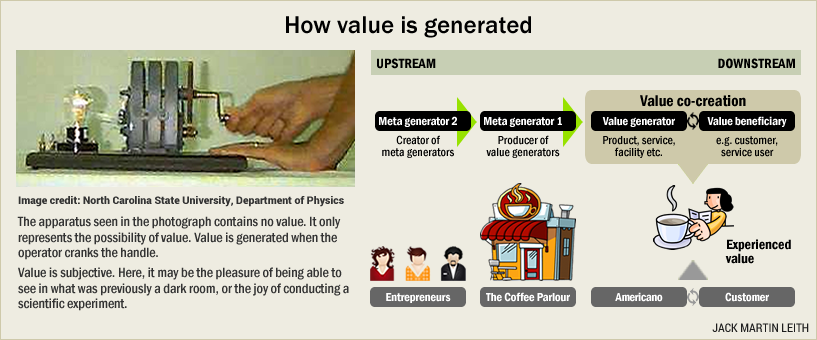
An enterprise creates a value generator (such as a product or a service) which generates value when the beneficiary interacts with it. An enterprise cannot create value – it can only create value generators.
Creative power
The newcreator’s value generation capability.
Geared toward generating anti-value or thwarting value generation, either deliberately or unintentionally.
See also Generative.
1. The shortest duration of time, currently formulated as Planck Time.
2. The nothingness between one moment and the next. This is what the term means to the newcreator.
Newcreators seek to bring forth a new reality, a new Now. The value generator (product, service or whatever) has been launched and is generating the intended downstream value, or the planned change has happened, or the problematic situation is a thing of the past. This new reality is the desired present, not the desired future. The past is a footprint left in the sand, the future is a fabrication and the only reality is this present moment. Whether at work or in their personal lives, people want what they want now, not in some hypothetical future that never arrives.
DownstreamLeading, on the other hand, is more to do with being the living embodiment of a new reality that’s needing to be created. Far from controlled stability, it concerns learning from, but letting go of, the past – and living the preferred future reality now, in the present.
Julian Simcox, The conflict between managing and leading (podcast, audio, 17:22)
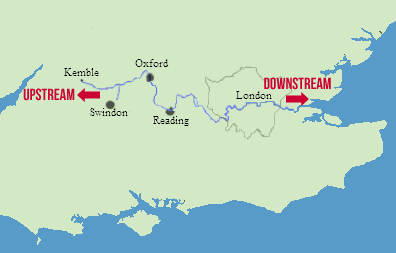
Distant from the source. Happening later in a sequence of activities. See also Upstream.
Ego
A state of mind brought about by overidentification with mundane world and denial of the reality of primal world.
“Ego’s noble task is to make us feel secure, special and immortal.” Susanne Cook-Greuter, The Construct-Aware Stage of Ego Development and its Relationship to the Fool Archetype (pdf)
The ability to proceed despite uncertainty. A critical but curious mind’s readiness to adopt a reality model (even if provisionally) for which there is less than absolute, empirical proof –Jay B. Gaskill, The Dialogic Imperative. Faith of this kind is a prerequisite for those wishing to adopt the Now-to-New way of thinking, doing and being. Without faith, primal world and natural imagining will be hard to access on demand. The newcreator talks about faith in much the same way as don Juan Matus, the teacher of Carlos Castaneda, talks about believing without believing.
Read more: The imperative of faith and believing without believing
In agreement with the project’s demands and dynamics. Meeting the design specification.
A state of completeness in which the creation exists in all its glory, being all it can be, with nothing wanting. A state in which value generation potential is being fully realised.
Generative field. Another name for intent.
See Create vs. generate.
Geared towards generating value. Seeking to create that which improves people’s lives and makes the world a better place. There are two main levels of generative action. Level 1 is action aimed at generating value for others (lend someone your bike). Level 2 is action aimed at creating that which generates value for others, again and again (give them your bike, or start a nonprofit that lends out bikes). See also Degenerative.
Napoleon Hill was an American author known for his book Think and Grow Rich! (1937), which is among the best-selling self-help books of all time.
HolisticRiches cannot always be measured in money!
Money and material things are essential for freedom of body and mind, but there are some who will feel that the greatest of all riches can be evaluated only in terms of lasting friendships, harmonious family relationships, sympathy and understanding between business associates, and introspective harmony which brings one peace of mind measurable only in spiritual values!
Napoleon Hill, Think and Grow Rich! 1938 edition published by The Ralston Society, Meriden, Conn., USA
A credible definition of holism must itself be holistic, but the limitations of language make this impossible. Holistic is the converse of reductionist. See also Reductionism; Wholeness. Read the article What does holistic mean?
In contrast to a concept, an idea is an initial spark, a sudden flash of inspiration, a glimpse of what could be, pointing towards a fruitful intervention, strategy, solution or programme of work, or a potential value generator (product, service, facility etc.).
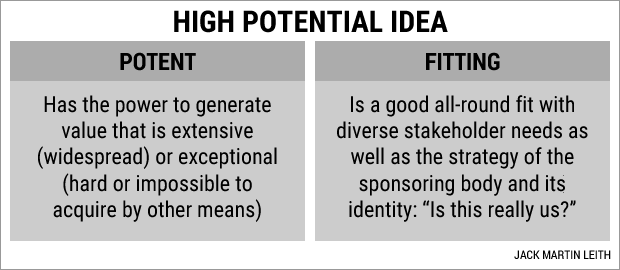
An idea that is both potent (it displays the potential to generate extensive or exceptional value) and fitting (it meets the design specification).
Imagining, natural
The right hemisphere (primal world) counterpart to synthetic imagination. An unforced and uncontrived activity in which the newcreator forms a co-creative partnership with intent. Imagining is an activity, whereas imagination is an abstraction, a no-thing.
The left hemisphere / mundane world counterpart to natural imagining. Synthetic imagination is mechanical and its output derivative. Those employing synthetic imagination recall and repurpose buried thoughts, connect disparate notions, and combine existing ideas into new ones – an approach known as combinatorial creativity. The newcreator takes a raw idea conceived through natural imagining and deploys synthetic imagination to develop it into a fully-formed concept. The term synthetic imagination was originated by Napoleon Hill, author of Think and Grow Rich!, who contrasts it with creative imagination. Imagination is an abstraction, a no-thing, unlike imagining, which is an activity.
Read more about impeccabilityWarriors know that seers who travel into the unknown to see the unknowable must be in an impeccable state of being; to be in an impeccable state of being is to be free from rational assumptions and rational fears.
Tomas, Creative Victory
Impulse
Something that causes something to happen or happen more quickly; an impetus. View source
An impelling force or motion. View source
The generative impulse concerned with creating the new and bringing it to fullness. Humanity’s common purpose. For the individual, an ever-present desire to be of service and to enrich the world or a particular piece of it.
Watch the video: Aligning with the creative impulse of the universe
Iain McGilchrist in conversation with Niall McKeever, The Weekend University
Running time 1:06:02
Intervention
An action or series of actions designed to bring about a desired outcome or state of affairs.
Laity, the ♥Learn this:
There is only one certainty, and that is joy.
Everything can be explained: joy has no explanation.
We cannot explain why we are joyful.
Joy is our task.
What you receive is a source of joy for the joyless.Source: Talking with Angels; oral text by Hanna Dallos; transcription and commentary by Gitta Mallasz
That part of the economy in which individuals or groups are engaged in Now-to-New projects on their own account and not under the auspices of an employer organisation. Here are some examples of such projects: establishing a YouTube channel, seeking to reopen a local train station or railway line, setting up a community radio station, revitalising a struggling community, and starting a business or nonprofit organisation.
The universe and all it contains. Everything that exists. The created world. The manifest is dimensioned (located in spacetime), describable and knowable. Sometimes referred to as the material realm. See also the Unmanifest.
Dr Iain McGilchrist is a psychiatrist, neuroscience researcher, philosopher and literary scholar, best known for his work on the differences between the left and right hemispheres of the brain and their impact on our perception of and interaction with the world. He is the author of several books, notably The Master and His Emissary: The Divided Brain and the Making of the Western World and The Matter with Things: Our Brains, Our Delusions, and the Unmaking of the World.
A Yaqui Indian man of knowledge. The teacher of anthropologist and author Carlos Castaneda. Many consider him a fictional character or a composite of people known to Castaneda.
That which makes life and work truly worthwhile. Source: Edward Matchett.
A felt connection to self, others and the world. Source: Kaleb, founder of the Kompendium Project.
Also known as a large group intervention, this is a collaborative gathering taking place over half a day, an entire day or several days, and usually forming part of a broader programme of work aimed at solving a pressing problem, effecting a desired change or bringing into being something new that will generate value for customers or users and other beneficiaries. Such a meeting brings together diverse stakeholders, often in large numbers (the upper limit being constrained only by the capacity of the preferred venue) and with widely-differing agendas and perspectives, in order to discuss issues of heartfelt concern, share ideas, pool knowledge, explore possibilities and devise plans for sustained collaborative action.
A meta generator 1 is a producer of value generators (products, services etc.) – typically an enterprise. A meta generator 2 is a producer of meta generators, such as an entrepreneur. View graphic
Transcend the Mundane is a superpower formed of the activating powers Openness, Love and Groundedness.
Transcending the mundane means breaking free from the confines of mundane world, entering primal world and activating the creative powers Imagination, Conceptualisation, Materialisation and Realisation.
See also Mundane world; Transcend, 147.
The everyday world, a default reality where people spend most of their waking lives. A world of descriptions. If something can be named, described and explained, it is part of mundane world. Mundane world is the sum total of everything we know and everything the rational mind can imagine. When we are situated in primal world we experience life in the raw – untamed, unfiltered, uncodified and unconceptualised – but in mundane world, we experience only a representation of reality, a video we mistake for the live performance.
See also Primal world; Transcend the Mundane.The first attention basically consists of everything that ordinary man considers it means to be human. It is the reality that has been constructed and developed in order to deal with the daily world and encompasses an awareness restricted to the physical body.
Lorraine Voss, Female Warrior (view)
Nagual, the
See Primal world.
Someone dedicated to bringing the new into being and generating extensive (widespread) or exceptional (hard or impossible to acquire by other means) value for the eventual beneficiaries.
A shift from the current situation (Now) to what’s needed instead (New). There are seven kinds of Now-to-New work, which are are neither mutually exclusive nor collectively exhaustive: creating, changing, problem solving, surmounting, responding, developing, and realising value generation potential. On this website I only talk about the first three items in an effort to prevent overwhelm.
A group of people who work together in an organised way for a shared purpose. Source: Cambridge Dictionary.
Pure perception is a way of seeing and understanding reality without the distortion of personal judgments, biases, or preconceived notions. It involves direct, unmediated awareness of sensory information, allowing for a clearer and more objective view of things as they are. The terms pure perception and primal world are more or less synonymous. Read more about pure perception
What could be. An imagined opportunity to generate value. A possibility is imagined in the present tense, as though the imagined scenario is current reality.
Having great power, force, influence or effect. To the newcreator, it means showing the potential to generate extensive (widespread) or exceptional (hard or impossible to acquire by other means) downstream value.
Possible future yield, given favourable conditions. Potential is the what. Capability is the how (people, equipment, money and other means).
Agency. “The capability of doing or accomplishing something.” – Random House Kernerman Webster’s College Dictionary via The Free Dictionary. See also Creative power; Value generation capability.
Newcreators have at their disposal seven powers, each associated with a certain part of the body. Openness, Love and Groundedness are activating powers. Imagination, Materialisation, Conceptualisation and Realisation are creative powers.
An indescribable place of pure perception. This world cannot be explained or proved to exist; it can only be experienced. Primal world is raw reality, visceral, untamed, unfiltered, uncodified and unconceptualised. When you are immersed in primal world you are able to activate and deploy natural imagining. See also Mundane world.
Readiness work enables newcreators to prime themselves for the appearance of a potent and fitting idea by becoming immersed in the demands and dynamics of the project and having a felt sense of the new reality in which the envisioned value will arise. Readiness work enables team or group members to activate and deploy natural imagining.
An attempt or tendency to explain a complex set of facts, entities, phenomena, or structures by another, simpler set. Source: American Heritage® Dictionary of the English Language, Fifth Edition. The converse of reductionist is holistic.
Sensemaking is about understanding the world in a way that enables the taking of meaningful action. Source: Dave Snowden, The Cynefin Company (formerly Cognitive Edge). The newcreator does this through Readiness work.
Selfless action taken for the benefit of others, motivated by a fervent desire to enrich the world. When we give unconditional service, we help others without wanting anything in return. Coming from the heart, unconditional service is unconditional love made manifest through generative action.
Something expressed by an individual that not only presents information but performs an action as well. Source: Wikipedia — Speech act. A speech act can deployed as an intervention in order to bring forth a desired state of affairs. The speech act in this case is the right thing, said by the right person, to the right person, at the right moment, in the right way.
StakeholderThe animating force throughout creation. An unseen force that is life, the divine, the nagual, the light. To live a spiritual life is to identify oneself as the animator of creation, rather than as creation.
Allan Hardman, The Everything Toltec Wisdom Book | Sample 48 pages on Google Books
An individual or group that has an interest in any decision or activity of an organisation. Source: American Society for Quality. See also Beneficiary.
1. A problem-solving technique; an integrated set of choices that positions a company in a chosen field in a way that ensures victory. It starts with an identification of a gap between the aspirations of the organization and the current outcomes it is achieving. Source: Roger L. Martin, co-author (with A.G. Lafley, former CEO of Procter & Gamble) of Playing to Win: How Strategy Really Works.
2. How you overcome the obstacles that stand between where you are and what you want to achieve. Source: Richard Rumelt, Why bad strategy is a ‘social contagion’, on McKinsey & Company website.
The seven powers combine to form three superpowers: Transcend the Mundane (Openness + Love + Groundedness), Enrich the World (Imagination + Realisation), and Create the New (Conceptualisation + Materialisation). Transcend the Mundane must be activated in order to activate Enrich the World and Create the New.
A system is a whole that consists of parts — each of which can affect the system’s behaviour or properties. The parts of a system are interdependent — therefore no part or collection of parts of a system has an independent effect on it. A system is therefore a whole that cannot be divided into independent parts. The essential or defining properties of any system are properties of the whole — which none of its parts have. A system is not the sum of the behaviour of its parts — it is a product of their interactions. If you were to select the best parts from all the models of automobile in the world, you could not assemble them into the world’s best automobile — in fact you couldn’t create an automobile at all, because the parts don’t fit together. It is foolish to seek to improve the quality of a part of the system unless the quality of the system as a whole is simultaneously improved.
Source: Russell Ackoff, If Russ Ackoff had given a TED Talk (video; 12:18). summarised by Geoff Marlow
See also Wholeness.Often, when we speak about systems, we treat them as being out there separate from us as part of an objective reality, waiting to be discovered. When we identify a ‘system’, we are performing an act of abstraction guided by practical concerns. We select certain elements as relevant, establish boundaries, and identify patterns of relationships while ignoring countless other potential elements. This selection process is inherently pragmatic, shaped by our ‘concernful’ dealings with the world.
Being-In-the-System – Heideggerian Insights int Systems Thinking – Part 1 by Harish Jose
Theory U
Developed by Otto Scharmer, Theory U is an awareness-based change framework that guides individuals and groups through a U-shaped process of sensing, presencing and co-creating to enable deep systemic transformation. Otto Scharmer is a senior lecturer at MIT, co-founder of u-school for transformation and author of Theory U: Leading from the Future As it Emerges.
Read more about Theory U and Presencing
See Delta time.
“Man or woman of knowledge. The Toltecs were ancient sorcerer-seers, the receivers and holders of mysteries.” Source: Creative Victory: Reflections on the Collected Works of Carlos Castaneda, by Tomas.
There is also an era in Mexican history called Toltec, but this is unrelated to Carlos Castaneda’s use of the term. Source: Théun Mares.
For a forensic examination of Castaneda’s use of ‘Toltec’, I recommend Castaneda’s Mesoamerican inspiration: the Tonal/Nagual, the cardinal points and the birth of contemporary Toltec spirituality (pdf) by Zuzana Marie Kostićová, Department of Religious Studies, Hussite Theological Faculty, Charles University in Prague, Czech Republic.
See also Don Juan Matus.
See Mundane world.
To rise above or go beyond the ordinary limits of. To triumph over the negative or restrictive aspects of.
The source of everything that exists, has existed and could exist. Infinite possibility. The creating world. The nonmaterial realm. The unmanifest is dimensionless (not located in spacetime), indescribable and unknowable.
Closer to the source. Happening earlier in a sequence of activities. See also Downstream.
Tangible or intangible benefit. The three main forms of value are economic value, conceptual value, and experienced value. On this website, I mostly talk about experienced value, which encompasses meaning and joy. Value is not delivered as if by FedEx. It is co-created when the beneficiary (e.g. consumer or user) interacts with the value generator (product, service etc.). See Wikipedia: Service-dominant logic and Evolving to a New Dominant Logic for Marketing (pdf; 18 pages) by Stephen L. Vargo and Robert F. Lusch.
The kind of value you only notice when it is absent – generally, you only notice the anti-value that is generated when functional value is absent. “Salt is the stuff that makes potatoes taste horrible if you don’t put any in.” —Dr D. J. Stewart.
The means available to an individual, group or enterprise for generating value or creating that which generates value.
The value a value generator (product, service, facility, event, establishment, artistic work etc.) or meta generator (an enterprise for example), could be generating when conditions are favourable. Potential is the what (the possible future yield) and capability is the how (people, equipment, money and other means).
Something tangible or intangible that produces experienced value when the user interacts with it, such as a product, service, facility (this website, for instance), event (conference, party, festival), establishment (museum, theatre, restaurant), or artistic work (book, song, musical composition, painting, theatrical production).
The concept of value co-creation comes from service-dominant logic, originated by academics Stephen Vargo and Robert Lusch who talk about appliance in much the same way as I talk about value generator.
Vision of realised potential ♥
A depiction – an actual picture accompanied by a vivid and compelling synopsis – of how the world will look, sound and feel when the person, group or enterprise is fully utilising its value generation capability and manifesting its intent without constraint.
“An undivided or unbroken completeness or totality with nothing wanting.” Source: The Free Dictionary. Wholeness is all-encompassing, transcending the dualistic nature of mundane reality, and cannot be reduced to parts (see Holistic). Neither can it be reduced to a pithy definition or distilled into an elegant concept. “The Tao that can be told is not the eternal Tao.” Lau Tzu.
Seeking to generate significant value for customers or users, other beneficiaries and wider society.
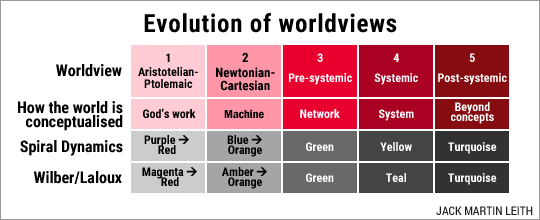
An individual’s set of fundamental beliefs and organising principles; his or her unquestioned assumptions about the nature of reality and the human place in it. A worldview is like the operating system in a computer, controlling operations behind the scenes but mostly outside the user’s awareness. When someone upgrades his or her worldview, certain things that were previously impossible become possible, and some things that were difficult become easy. Generally, a new worldview does not replace the old one, but subsumes it.
Read more
Search the site
Not case sensitive. Do not to hit return.